Last updated: Sun, Jun 18, 2017
Sensory neurons that are involved in pain perception generally have bare sensory endings that are highly branched (like a tree). The branching is quite variable. A single neuron can have as many as hundreds of terminal endings.1 Cutaneous C fibers (those at the surface of the skin) typically branch out to cover an area (called the receptive field) of about 100 square millimeters.2 (A square covering 100 square millimeters is about 3/8” on a side.) Cutaneous A-delta fibers have somewhat larger receptive fields. Some sensory neurons have a receptive field as large as two inches in diameter.3
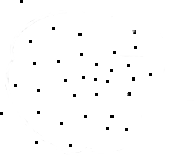
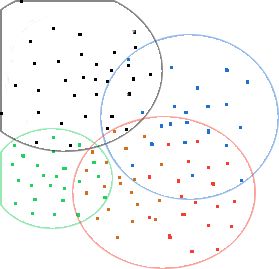
Figure 1: A receptive field illustrates how the sensitive terminal branches of a single C fiber might be distributed. The area covered is somewhat irregular and the coverage is somewhat uneven. Figure 2: Overlapping receptive fields illustrates how a number of C fibers might cover a larger area. Notice that the receptive fields overlap.
Sensory neurons contain vesicles on their surface where they penetrate the epidermis, which is the outer living layer of the skin. It is believed that these vesicles are used to secrete chemicals into the epidermis when the skin is injured.